What Is a Backlink in SEO? A Complete Beginner’s Guide
If you have ever read about SEO, you must have come across the word “backlink” a hundred times. But what is a backlink in SEO, exactly? And why does everyone keep talking about it like it is the holy grail of search rankings?
In this guide, I am going to break it all down for you — simply, clearly, and without the jargon. Whether you are just starting out or looking to sharpen your SEO knowledge, this post covers everything you need to know about backlinks.
What Is a Backlink in SEO?
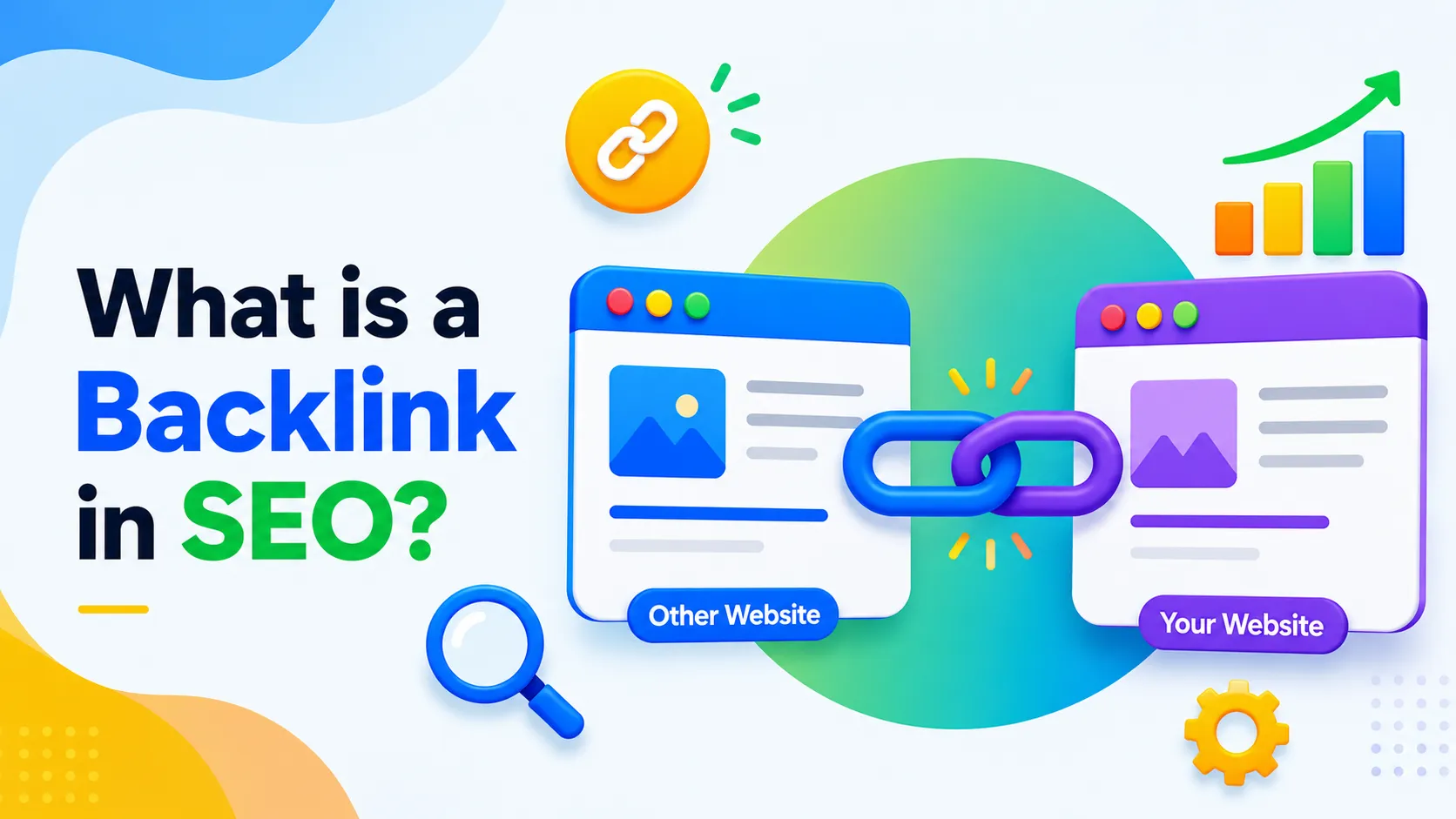
A backlink is a link that one website gets from another website.
When Website A links to Website B, that link is a backlink for Website B.
Think of it this way — if a popular food blogger links to your recipe website, your site just earned a backlink. Simple as that.
In the world of SEO, backlinks are one of the most powerful ranking signals. Google and other search engines treat them like votes of confidence. The more quality backlinks your site has, the more trustworthy and authoritative it appears in the eyes of search engines.
Why Are Backlinks Important for SEO?
Backlinks are not just links. They are trust signals.
When a reputable website links to yours, Google sees it as an endorsement. It tells the algorithm, “Hey, this page has something valuable — it is worth ranking.”
Here is why backlinks matter so much:
- They improve your domain authority. More quality backlinks = higher authority in your niche.
- They drive referral traffic. Real users click links and land on your site.
- They help search engines discover your pages. Googlebot follows links to crawl and index new content.
- They directly impact rankings. Backlinks remain one of Google’s top three ranking factors.
Without backlinks, even the most perfectly written content can sit on page 10 of Google and get zero clicks.
How Do Backlinks Work?
Search engines use backlinks as a way to measure the credibility of a page.
When Google’s crawler finds a backlink pointing to your site, it follows that link, indexes your page, and evaluates the context of the link. It considers questions like:
- Is the linking site relevant to your niche?
- Is the link placed naturally in the content?
- Does the anchor text match what your page is about?
- Is the linking domain trusted and authoritative?
All of these signals combine to determine how much “link equity” — sometimes called link juice — gets passed to your page.
Types of Backlinks in SEO
Not all backlinks are equal. Understanding the different types helps you focus your efforts on what actually moves the needle.
1. DoFollow Backlinks
These are the standard backlinks that pass link equity from one site to another. When a website gives you a dofollow backlink, it is essentially vouching for your content. Most editorial links are dofollow by default.
2. NoFollow Backlinks
A nofollow backlink includes the rel="nofollow" attribute in its HTML. This tells search engines not to pass link authority to the linked site. Blog comments, forum links, and most social media links are nofollow.
Even though nofollow links do not directly boost rankings, they still bring in referral traffic and add diversity to your backlink profile.
3. Sponsored Backlinks
These are links that are paid for. Google requires that sponsored or paid links be tagged with rel="sponsored" to stay transparent. Ignoring this rule can lead to manual penalties.
4. UGC (User-Generated Content) Backlinks
These come from user-generated content like forum posts, blog comments, or community pages. They are tagged with rel="ugc" and do not carry much SEO weight.
5. Editorial Backlinks
These are the most valuable type of backlinks. An editorial backlink is earned naturally when another website references your content because it is genuinely helpful. No asking, no paying — just great content doing the work.
DoFollow vs. NoFollow Backlinks — Quick Comparison
| Feature | DoFollow | NoFollow |
|---|---|---|
| Passes Link Equity | Yes | No |
| Boosts Rankings | Directly | Indirectly |
| Common Source | Editorial content | Comments, forums, social |
| Value in SEO | High | Moderate |
| Risk of Penalty | If spammy | Low |
What Makes a Good Backlink?
Getting any backlink is not enough. The quality of the backlink matters far more than the quantity.
Here is what separates a good backlink from a bad one:
Relevance
A backlink from a site in your same niche carries much more weight than a random link from an unrelated website. If you run an SEO blog, a backlink from another marketing site is far more valuable than one from a cooking website.
Domain Authority
Links from high-authority domains — think established news sites, respected industry blogs, or government websites — carry more weight. Before you chase a backlink, check the domain authority of the linking site.
Anchor Text
Anchor text is the clickable text used in a hyperlink. When the anchor text contains relevant keywords related to your page, it gives search engines a stronger signal about what your page is about. But keep it natural — over-optimized anchor text can trigger penalties.
For example, if someone links to your article about keyword difficulty using the anchor text “how to measure keyword difficulty,” that is a perfectly natural, well-optimized anchor text.
Link Placement
A link buried in a footer or sidebar is worth far less than one placed naturally within the body of an article. In-content links are the gold standard.
Traffic on the Linking Page
If the page linking to you gets real organic traffic, some of that traffic can flow to your site through the link. This is what makes editorial backlinks from popular pages so powerful.
Good Backlinks vs. Bad Backlinks
| Type | Good Backlink | Bad Backlink |
|---|---|---|
| Source | High-authority niche site | Link farms, PBNs |
| Placement | Within body content | Footer, sidebar spam |
| Anchor Text | Natural, relevant | Exact-match stuffed |
| Editorial Nature | Earned naturally | Bought or traded |
| Risk | None | Penalty risk |
How to Build Backlinks the Right Way
Link building is an art. There is no shortcut — but there are smart, proven strategies.
1. Create Link-Worthy Content
Content that earns backlinks organically is called “linkable assets.” These include:
- In-depth guides and tutorials
- Original research and case studies
- Infographics and visual resources
- Free tools or templates
When your content is genuinely useful, other websites will naturally reference it.
2. Guest Blogging
Write articles for other websites in your niche. In return, you get a backlink in your author bio or within the content. This remains one of the most effective white-hat link building strategies available.
3. Broken Link Building
This is one of my favorite techniques. Find broken links on other websites that point to dead pages. Then reach out to the site owner and suggest your relevant content as a replacement.
You can learn more about identifying these opportunities in this detailed guide on how to find broken links on your website.
4. Digital PR and HARO
Pitch yourself as an expert source to journalists and bloggers. When they quote or mention you, you earn a backlink from a media site. HARO (Help a Reporter Out) is a popular platform for this approach.
5. Skyscraper Technique
Find top-ranking content in your niche, create something noticeably better, then reach out to sites that linked to the original piece and suggest your improved version.
6. Resource Page Link Building
Many websites maintain resource pages listing helpful tools and articles. Reach out and ask to be included if your content genuinely adds value.
Common Backlink Mistakes to Avoid
Even experienced SEOs make these mistakes. Watch out:
- Buying backlinks — Google’s spam detection is smarter than ever. Paid links that are not tagged properly can trigger manual penalties.
- Chasing quantity over quality — 5 great backlinks from authoritative sites are worth more than 500 spammy ones.
- Ignoring anchor text diversity — Using the same keyword-heavy anchor text repeatedly looks manipulative.
- Getting links from irrelevant sites — Relevance matters. A backlink from an unrelated industry gives minimal SEO value.
- Neglecting your existing backlinks — Backlinks can go broken over time. A page you earned a link from may get deleted, making the backlink dead. Regular audits help you stay on top of this.
How to Check Your Backlinks
You do not have to guess how many backlinks your site has. Several tools give you a full picture:
| Tool | Key Feature |
|---|---|
| Google Search Console | Free, shows links Google has found |
| Ahrefs | Deep backlink analysis and competitor research |
| SEMrush | Backlink audit and tracking |
| Moz Link Explorer | Domain authority and link profile |
| Ubersuggest | Budget-friendly backlink checker |
Google Search Console is always the best place to start since it shows you exactly what Google sees.
Backlinks and Technical SEO — The Connection
Backlinks work best when your technical SEO foundation is solid.
If Google cannot crawl and index your pages properly, even the best backlinks will not fully pass their value. Factors like your site’s crawl efficiency, site speed, and internal linking structure all play a role in how effectively backlinks benefit your rankings.
Understanding concepts like what is schema markup can also help your content stand out in search results, which indirectly increases the chances of earning more organic backlinks.
How Long Does It Take for Backlinks to Impact Rankings?
This is the question everyone wants answered.
Honestly, it varies. In most cases, you can expect to see some movement within 6 to 12 weeks after earning a quality backlink. But this depends on:
- The authority of the linking domain
- How often Google crawls the linking page
- The current authority of your own site
- The competition level for your target keywords
Patience is part of the process. SEO is a long game.
Frequently Asked Questions
What is a backlink in SEO in simple words?
A backlink is a link from one website to another. When another website links to your site, that is a backlink for you. Search engines use backlinks to measure the authority and credibility of your pages.
Are backlinks still important in 2025?
Yes, absolutely. Backlinks remain one of Google’s most important ranking factors. While the algorithm has evolved, link authority continues to play a significant role in determining which pages rank higher in search results.
How many backlinks do I need to rank?
There is no fixed number. It depends on your niche, competition level, and the quality of the links. A handful of high-authority backlinks can outperform hundreds of low-quality ones. Focus on quality, not quantity.
What is the difference between a dofollow and a nofollow backlink?
A dofollow backlink passes SEO authority (link juice) from the linking site to your site. A nofollow backlink does not pass authority but can still bring referral traffic and diversify your link profile.
Can bad backlinks hurt my SEO?
Yes. Links from spammy, irrelevant, or low-quality websites can negatively affect your rankings. If you spot such links, you can use Google’s Disavow Tool to ask Google to ignore them.
How do I get my first backlinks?
Start with guest posting on relevant blogs, submitting your site to quality directories, creating shareable content like guides or infographics, and doing broken link building outreach. These are beginner-friendly and effective strategies.
Is it okay to buy backlinks?
No. Buying backlinks violates Google’s guidelines. If detected, it can result in a manual penalty, causing your site to drop significantly in rankings or even get deindexed. Always focus on earning backlinks naturally.
Conclusion
So, what is a backlink in SEO? It is simply a link from one website to another — but the impact it has on your search rankings is anything but simple.
Backlinks are votes of trust. The more high-quality, relevant backlinks your site earns, the more authority it builds in the eyes of Google. And with more authority comes better rankings, more organic traffic, and ultimately more growth for your website.
Focus on earning backlinks naturally through great content, smart outreach, and real relationships within your niche. Avoid shortcuts. Build your profile steadily, and the results will come.
Start small, stay consistent, and think long-term. That is the backlink strategy that actually works.