What Is Click Through Rate in SEO? And How to Improve It
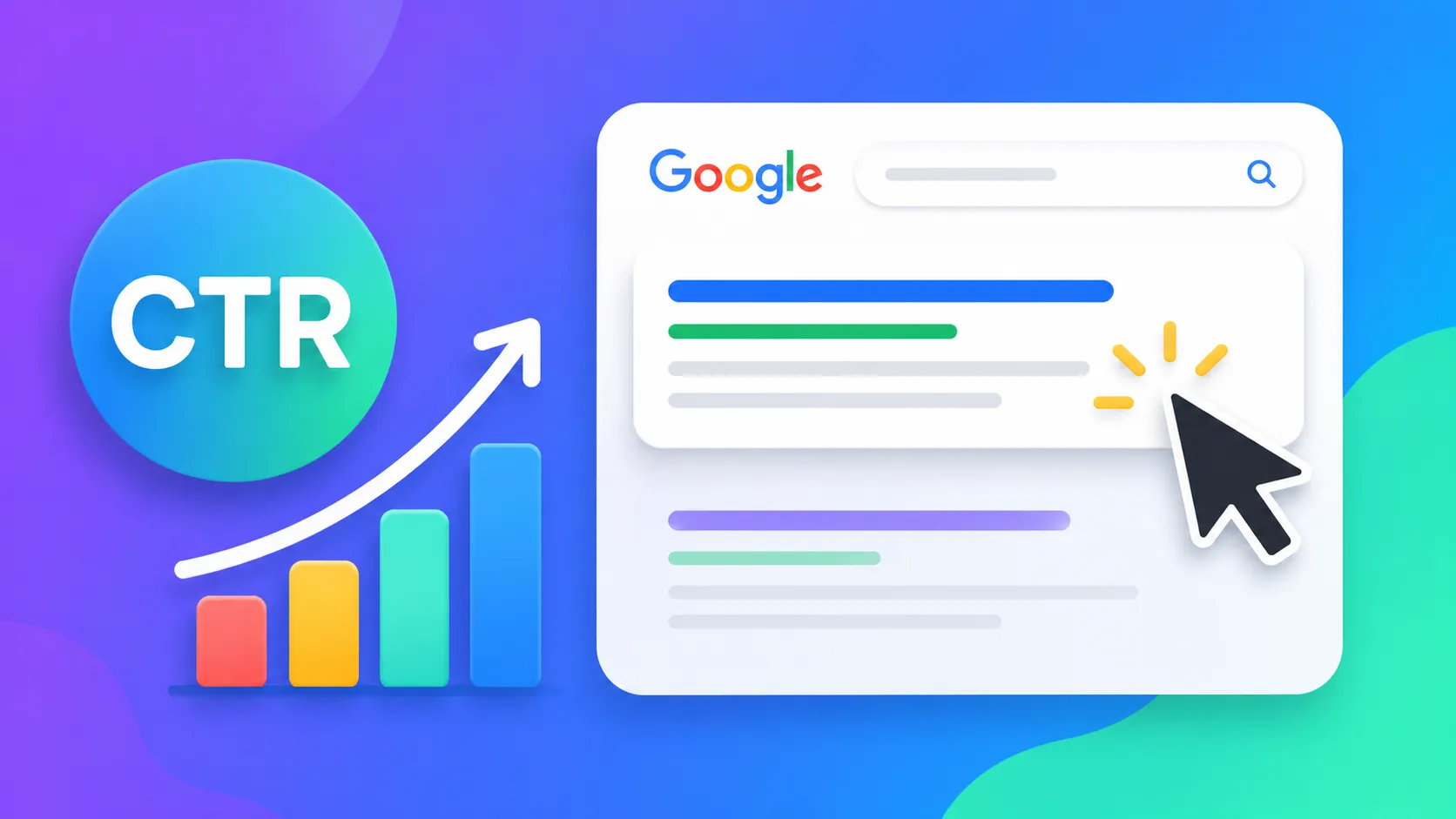
If you have been doing SEO for a while, you have probably heard the term CTR thrown around a lot. But what is click through rate in SEO, exactly? And why does it matter so much for your rankings and organic traffic?
In this guide, I am going to break it all down for you. No fluff, just clear, actionable information you can actually use.
What Is Click Through Rate in SEO?
Click through rate (CTR) in SEO refers to the percentage of people who click on your website link after seeing it in the search engine results pages (SERPs).
In simple terms, if 100 people see your page in Google search results and 10 of them click on it, your CTR is 10%.
Here is the basic formula:
CTR = (Total Clicks ÷ Total Impressions) × 100
You can find this data directly inside Google Search Console under the Performance tab. It shows your clicks, impressions, and CTR for every URL, query, and country.
Why Does Click Through Rate Matter in SEO?
A lot of SEO beginners focus only on rankings. But ranking on page one means nothing if nobody is clicking on your result.
Click through rate matters for two main reasons:
1. It drives organic traffic More clicks mean more visitors. Even a small improvement in CTR can significantly increase your monthly traffic without any change in your actual ranking position.
2. It may influence your rankings Google has not officially confirmed that CTR is a direct ranking factor. However, many SEO experts believe that if users consistently prefer your result over competitors, Google notices that. A higher CTR signals that your result is relevant and attractive to searchers.
Think about it from Google’s perspective — if users keep skipping your result and clicking on a competitor below you, that is a signal that your result is less relevant.
Average CTR Benchmarks by Position
Understanding average CTR by ranking position helps you set realistic expectations and identify where your pages are underperforming.
| Ranking Position | Average CTR |
|---|---|
| Position 1 | 27.6% |
| Position 2 | 15.8% |
| Position 3 | 11.0% |
| Position 4 | 8.4% |
| Position 5 | 6.3% |
| Position 6–10 | 2–4% |
| Page 2+ | Below 1% |
As you can see, the difference between position 1 and position 2 is massive. This is why optimizing your CTR matters just as much as climbing one extra position.
What Factors Affect Click Through Rate in SEO?
Several on-page and off-page elements determine whether a user clicks on your result or scrolls past it.
1. Title Tag
Your title tag is the first thing users see in the SERPs. A boring, generic title gets ignored. A compelling, keyword-rich title earns clicks.
Use power words, numbers, and brackets to make your title stand out. For example:
- Weak: Click Through Rate in SEO
- Strong: What Is Click Through Rate in SEO? (And How to Double It)
2. Meta Description
The meta description sits below your title in the SERPs. It gives users a preview of what to expect on your page.
While meta descriptions are not a direct ranking factor, they heavily influence whether someone clicks. Write them like a mini sales pitch — tell the user what they will get and why they should choose your page.
Keep it between 150–160 characters so it does not get cut off in the SERPs.
3. URL Structure
Clean, readable URLs perform better than messy ones. Compare these two:
- Messy: yoursite.com/?p=1234
- Clean: yoursite.com/what-is-click-through-rate-in-seo
A clear URL tells users and search engines exactly what the page is about before they even click.
4. Rich Snippets and Schema Markup
Rich results like star ratings, FAQs, and breadcrumbs make your result visually stand out in the SERPs. They take up more space on the page and provide extra information that builds trust.
If you want to implement these properly, check out this guide on schema markup and how to add it to your WordPress site.
5. Search Intent Match
If your title and meta description match exactly what the user is searching for, they are far more likely to click. Understanding search intent — whether it is informational, navigational, or transactional — is key to writing content that earns clicks.
How to Improve Click Through Rate in SEO
Now that you understand what affects CTR, let us look at practical ways to improve it.
Write Irresistible Title Tags
Follow these principles when writing titles:
- Include your primary keyword near the beginning
- Use numbers when possible (e.g., “7 Proven Ways to…”)
- Add power words like “Ultimate,” “Complete,” “Proven,” “Fast,” or “Free”
- Use brackets or parentheses to add bonus value, e.g., “(Updated 2025)”
- Keep it under 60 characters to avoid truncation
Optimize Your Meta Descriptions
Every meta description should:
- Include the focus keyword naturally
- Address the user’s pain point or question
- Have a clear call to action like “Learn how,” “Find out,” or “Discover”
- Be unique for every page on your site
Target Featured Snippets
Featured snippets appear above position 1 and can dramatically increase your CTR. To target them, structure your content with clear definitions, numbered lists, and comparison tables.
Answer the target question directly and concisely in the first 40–60 words of your content.
Use Emotional and Power Words
Emotional triggers make users curious, which leads to more clicks. Words like “secret,” “mistake,” “warning,” “finally,” and “revealed” create curiosity gaps that are hard to resist.
But do not mislead users. Your content must deliver on whatever your title promises.
Test and Iterate
Use Google Search Console to monitor your CTR regularly. Sort your pages by impressions and look for pages that rank well but have a low CTR. These are your best opportunities.
Test different title tags and meta descriptions and check back in a few weeks to see if CTR improves.
CTR vs Other Key SEO Metrics
It helps to understand how click through rate compares to related SEO metrics.
| Metric | What It Measures | Where to Find It |
|---|---|---|
| CTR | % of impressions that result in a click | Google Search Console |
| Impressions | How many times your page appeared in SERPs | Google Search Console |
| Organic Traffic | Total visitors from search engines | Google Analytics |
| Bounce Rate | % of visitors who leave without interacting | Google Analytics |
| Keyword Difficulty | How hard it is to rank for a keyword | Ahrefs, Semrush |
Understanding these metrics together paints a full picture of your SEO performance. For example, a page with thousands of impressions but a 1% CTR is clearly not resonating with searchers — that is your signal to rewrite the title and meta description.
If you want to learn more about how competitive a keyword is before you target it, take a look at this guide on keyword difficulty.
The Relationship Between CTR and Topical Authority
Here is something most people overlook.
Your click through rate does not exist in a vacuum. It works alongside your overall SEO strategy. When your site covers a topic deeply and consistently, users begin to recognize your brand in the SERPs. Brand familiarity leads to higher CTR.
If someone has landed on your site before and found the content useful, they are more likely to click on your result again. This is closely tied to building topical authority in SEO, which means becoming the go-to source for a specific niche or subject.
The two work together — stronger topical authority builds brand trust, and brand trust lifts CTR over time.
Common Click Through Rate Mistakes to Avoid
Many site owners unknowingly hurt their own CTR. Watch out for these common mistakes:
Keyword stuffing in titles — Cramming keywords into your title makes it unreadable and unappealing. Write for humans first.
Duplicate meta descriptions — Using the same meta description across multiple pages confuses both users and Google. Make every description unique.
Ignoring mobile SERPs — Titles and descriptions display differently on mobile. Keep titles under 55 characters and descriptions under 120 characters to avoid cutoff on smaller screens.
Not tracking CTR at all — If you are not monitoring click through rate in Google Search Console, you are flying blind. Set up a regular review schedule.
Clickbait titles — Misleading titles might earn a click, but they cause users to bounce immediately. This hurts both your engagement metrics and your credibility.
How to Monitor CTR in Google Search Console
Here is a quick step-by-step to check your CTR data:
- Log in to Google Search Console
- Select your property (your website)
- Click on Performance in the left sidebar
- Make sure Average CTR and Average Position are toggled on
- Scroll down to the Queries or Pages tab
- Sort by Impressions to find high-visibility, low-CTR pages
- Prioritize those pages for title and meta description rewrites
It is that simple. You do not need any paid tools to start improving your CTR right now.
FAQs
What is a good click through rate in SEO?
A CTR above 3–5% is generally considered good for most keywords. However, for branded searches or position 1 rankings, a CTR of 20–30% or higher is achievable. It also depends on the type of query — navigational searches tend to have much higher CTRs than informational ones.
Does click through rate directly affect Google rankings?
Google has not officially confirmed CTR as a direct ranking signal. However, many SEO professionals believe that consistently high CTR sends positive engagement signals to Google. Some industry studies suggest a correlation between above-average CTR and ranking improvements.
What is the difference between CTR and impressions?
Impressions measure how many times your page appeared in search results. CTR measures what percentage of those impressions resulted in an actual click. You can have millions of impressions but a terrible CTR if your title or meta description is weak.
How often should I check my CTR in Google Search Console?
Check your CTR data at least once a month. For pages you are actively optimizing, check weekly. Look for significant drops in CTR as they may indicate that a competitor has introduced rich snippets or a more compelling result.
Can I improve CTR without changing my ranking?
Absolutely. CTR optimization is one of the best quick wins in SEO because you can improve your traffic without waiting to rank higher. Simply rewriting your title tag and meta description can double your CTR on existing pages within a few weeks.
Does CTR matter for PPC (paid ads)?
Yes. In Google Ads, CTR directly affects your Quality Score, which influences your ad position and cost per click. A higher CTR in PPC lowers your costs and improves your ad placement — so it matters enormously in both paid and organic search.
Conclusion
Understanding what is click through rate in SEO is one of those fundamentals that can unlock serious traffic growth without requiring you to climb higher in the SERPs.
Your rankings get you in front of users. But your CTR determines whether they actually visit your site.
Start by pulling up Google Search Console today. Find your pages with the most impressions and the lowest CTR. Then rewrite the title tags and meta descriptions using the principles covered in this guide.
Small tweaks to your titles and descriptions can lead to meaningful increases in clicks — and over time, those clicks compound into significant organic traffic growth.
Focus on CTR, and let your content do the rest.